
Scott Musgrave-Takeda
Project Lead | Research & Policy Specialist | Stakeholder Engagement
Bridging research, practice, and impact
What I Do & WHo I AM
- Manage timelines, reporting, and outcomes
- Lead and coordinate multi-disciplinary projects (research, community, policy)
- Drive stakeholder engagement and partnerships
- Translate complex research into practical strategy
- Support evidence-informed decision making
Scott Musgrave-Takeda works at the intersection of research, community engagement, and policy, supporting projects that navigate complex environmental and social challenges. His work focuses on translating evidence into practice, coordinating stakeholders, and contributing to initiatives that connect local experience with broader institutional and systemic contexts.
He is currently completing a multi-year research project at the University of Melbourne that contributes to critical environmental justice frameworks. His research refines concepts such as the Treadmill of Destruction and examines how local environmental struggles, grounded in Okinawa, are shaped by and connected to international political and security systems. Alongside academic outputs, this work has involved extensive stakeholder engagement, qualitative research, and policy-relevant analysis.
Beyond his doctoral research, Scott brings significant experience in applied and community-based roles. He serves as Vice President of the incorporated charity The Association for New Elderly (ANE), where he supports community engagement initiatives, project development, and grant applications, and contributes to the organisation’s governance and strategic direction. He has also worked as a research assistant on collaborative projects, supporting evidence-based analysis and the production of public-facing outputs. In addition, he sits on the Monash City Council Environmental Advisory Committee, contributing to local environmental strategy and advisory processes.
Scott has teaching experience across international politics, Japanese language and culture, and the social sciences. This work has strengthened his ability to communicate complex ideas clearly and accessibly to diverse audiences, including students, civic actors, and policymakers.
He holds a Master’s degree in International Relations and a Bachelor’s degree in Applied Linguistics from Griffith University. Prior to his academic work, Scott worked in the international education sector in both Japan and Australia, an experience that shaped his approach to stakeholder engagement, cross-cultural collaboration, and working across institutional boundaries.
Originally from Queensland and now based in Melbourne, Scott brings a global perspective to locally grounded challenges. He is motivated by the belief that voice is not given but forged through relationships, learning, and sustained engagement in difficult spaces. He values authenticity not as a fixed attribute, but as something continually shaped by context, care, and responsibility.
Outside of work, he enjoys baseball, good coffee, and the everyday work of family life.
Get in touch
Scott is open to consulting, advisory, and collaborative opportunities, particularly projects involving research translation, stakeholder engagement, or policy-relevant analysis. He also welcomes invitations for talks and workshops. If you’d like to explore a potential collaboration or simply start a conversation, feel free to reach out.
.
Areas of Practice & Research
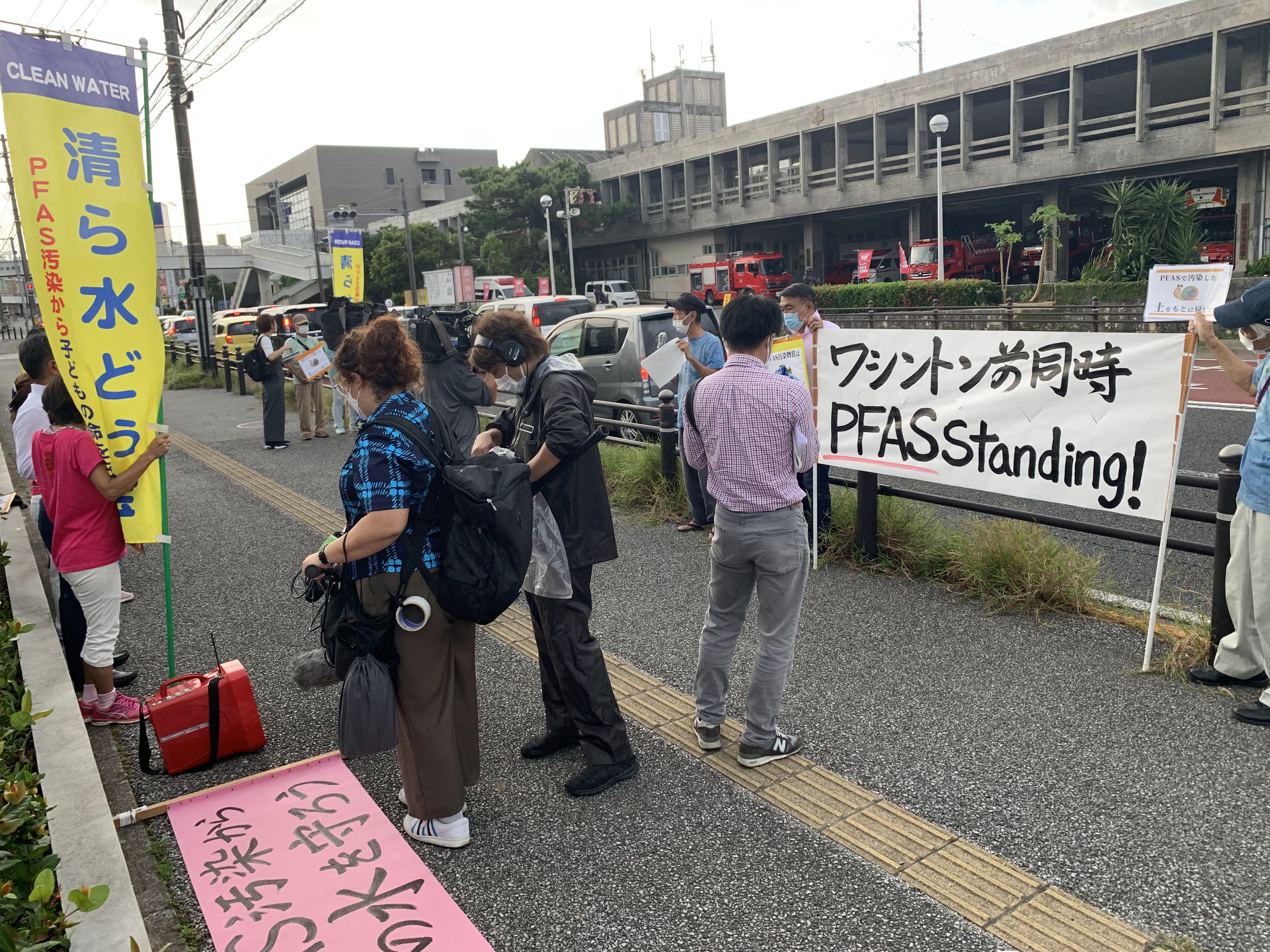
Okinawa: Environmental Governance and Civic Action
Okinawa provides a grounded case study for examining environmental justice issues in practice, particularly in relation to PFAS contamination and forest governance in the Yanbaru region. These issues sit at the intersection of environmental protection, public health, security infrastructure, and local governance, and have historically received limited attention outside the Ryukyu archipelago.
Through this work, I examine how civil society actors engage with complex institutional and political constraints as they seek to mitigate risk and advance environmental justice. This includes navigating overlapping jurisdictions, military presence, and international political dynamics that shape both environmental harm and the possibilities for redress.
This case-based work contributes transferable insights into managing environmental risk, stakeholder conflict, and institutional complexity in settings shaped by historical inequities and strategic interests.

Critical Environmental Justice (Framework & Methods)
I use Critical Environmental Justice (CEJ) as an analytical framework to examine how environmental harms are produced and governed through intersecting systems such as racism, capitalism, militarism, and colonialism. Rather than focusing solely on the distribution of environmental risks and benefits, CEJ enables analysis of the structural and institutional processes that shape who is exposed to harm, whose voices are heard, and how responsibility is assigned.
In practice, this framework supports more comprehensive and policy-relevant analysis by situating environmental issues within broader power dynamics and governance arrangements. It is particularly useful for understanding complex, contested cases where environmental harm is linked to security, development, and historical inequalities, and where technical solutions alone are insufficient.
By applying CEJ across research and applied projects, I support analysis and decision-making that accounts for structural risk, institutional responsibility, and long-term social outcomes.

Scott Musgrave-Takeda, PhD Candidate
Links to some of the great organisations and people working on mitigating environmental risk in Okinawa.
 Scott Musgrave-Takeda, PhD Candidate